Blog

  • How to Trade Crypto Without KYC Using Juno Swap

    How to Trade Crypto Without KYC Using Juno Swap

    Most crypto users don’t want their trades watched, logged, or limited. The rise of no KYC trading tools is a direct response to the demand for private, permissionless activity. With Juno Swap, you can trade crypto without ever verifying your identity.

    How to Trade Crypto Without KYC Using Juno Swap

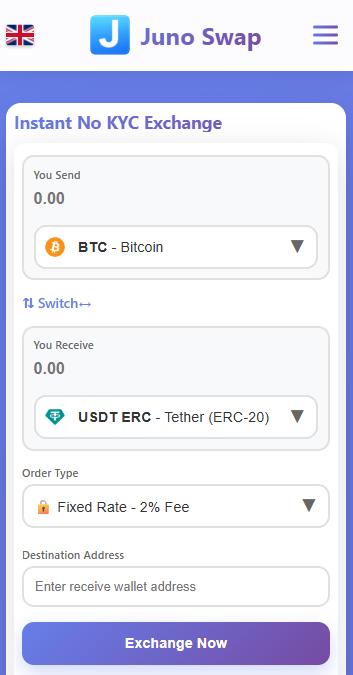
    Trade crypto privately on Juno Swap.

    Trading Without Surveillance

    Traditional exchanges want to know everything about you: name, address, documents. That data is stored, analyzed, and sometimes shared. Juno Swap takes a different approach: no names, no accounts, no surveillance.

    What Trade Crypto Without KYC Means

    It means you can buy and sell digital assets without handing over sensitive personal info. It also means faster onboarding, fewer risks of data leaks, and more freedom to move your funds.

    Crypto Without Verification Explained

    You use your wallet to initiate trades. No forms to fill, no verification steps. Your actions happen on-chain, and your wallet is the only identity needed.

    Common Trading Strategies Using Swaps

    • Hedging: Swapping into stablecoins to avoid market dips
    • Positioning: Moving between altcoins to take advantage of new trends
    • Arbitrage: Quick trades between assets to catch pricing gaps across platforms

    These strategies are all possible without needing an exchange account.

    Why Juno Swap Is Ideal for No KYC Trading

    No Limits on Accounts

    Because there are no accounts, there are no daily withdrawal limits, no tiered verifications, and no lockouts.

    Simple and Fast

    You go from coin A to coin B in minutes, directly from your wallet, with transparent pricing and no detours.

    Trade crypto without verification today.

    Swap and trade on Juno Swap (website:junoswap.me)

  • XRP Price Declines Amid ETF Disappointment

    XRP Price Declines Amid ETF Disappointment

    XRP Price Declines Amid ETF Disappointment

    The cryptocurrency XRP has faced a turbulent time recently, experiencing a 1% decline today, which adds to its overall drop of 11.2% over the past week. This ongoing downturn has prompted concerns among investors, particularly due to consistent disappointments regarding exchange-traded funds (ETFs) that were expected to provide market support.

    ETF Inflows and Market Reaction

    Despite significant inflows into various ETFs, investors have not seen corresponding upward movement in XRP’s price. Notably, the XRPC ETF, launched by Canary, recorded inflows of $25.4 million on November 18. However, this positive flow was insufficient to stabilize the price of XRP, which is currently trading below critical support levels.

    The broader ETF market displays an aggregate fund size of over $270 million, yet XRP continues to face headwinds. The presence of new ETF offerings like Franklin Templeton’s EZRP has not significantly impacted market behavior or investor sentiment, leading to skepticism about the effectiveness of these financial products in revitalizing XRP’s valuation.

    Current Price Action

    As of the latest updates, XRP’s price has breached the psychological mark of $2.20, raising fears of it falling below the $2.10 threshold. This decline marks a more than 40% reduction from XRP’s all-time high of $3.65, recorded in July. The current market trend suggests a consolidation that has left many holders in a precarious position, with only 58.5% of holders still making a profit, which introduces additional bearish risks.

    Investor Sentiment and Future Outlook

    The continuation of negative trends has cultivated an environment where selling pressure is heightened. Despite the influx of capital into ETFs, there appears to be insufficient institutional interest to counteract the prevailing bearish trend affecting XRP. The market’s current disposition suggests that unless there are significant changes in investor sentiment or ETF performance, XRP could continue to struggle in the near term.

    Investors remain cautious as they navigate through these challenging market dynamics, hoping for a turnaround that might drive XRP back towards its previous highs.

    Sources


    Disclosure: This article is for informational purposes only and does not constitute investment advice.

  • Altcoins Show Signs of Life as Bitcoin Holds Key Support

    Altcoins Show Signs of Life as Bitcoin Holds Key Support

    Altcoins Show Signs of Life as Bitcoin Holds Key Support

    As of today, the cryptocurrency market is witnessing notable activity. Bitcoin, currently stabilizing near a critical support level above $88,000, has set the stage for a shift in trader focus towards altcoins. This transition comes amid a broader market environment characterized by extreme fear, underscoring a volatile yet dynamic trading atmosphere.

    Traders often adjust their strategies based on prevailing market conditions, and the recent stabilization of Bitcoin appears to have prompted increased interest in alternative cryptocurrencies. With Bitcoin holding above the $88K threshold, some investors are looking beyond the leading cryptocurrency, exploring the potential opportunities within the altcoin space.

    The sharp rebounds seen across various altcoins suggest a renewed enthusiasm among traders as they look for potential growth areas, contrasting with the general sentiment of fear that has permeated the market. The market’s underlying dynamics may reflect a complex interplay between investor behavior and external factors influencing cryptocurrency valuations.

    This shift in focus to altcoins is not uncommon in markets, especially during periods of uncertainty. Traders often seek to capitalize on perceived undervalued assets when the price of Bitcoin stabilizes. This strategy may cover a multitude of altcoins, with various projects gaining attention as traders reassess their market positions.

    The broader implications of Bitcoin’s stability and the accompanying altcoin resurgence can provide insights into market trends—especially in how traders respond to support levels and price fluctuations. Such behaviors indicate a level of adaptability within the cryptocurrency community, as they navigate through swiftly changing market conditions.

    Given the market’s current state, ongoing monitoring and analysis will be critical for understanding the potential trajectories of cryptocurrencies in the coming days. Staying informed about market movements, trends, and trader sentiment can help paint a clearer picture of where the cryptocurrency landscape is heading.

    In summary, as Bitcoin hovers near pivotal support levels, the burst of activity in altcoins signals a complex but intriguing phase for the cryptocurrency sector. Whether this signals a larger trend remains to be seen, but the interplay between Bitcoin’s price action and altcoin movements is unmistakably significant in assessing market behaviors amidst current uncertainties.

    Sources


    Disclosure: This article is for informational purposes only and does not constitute investment advice.

  • New Hampshire’s Bitcoin Bond Moves into $140 Trillion Global Market

    New Hampshire’s Bitcoin Bond Moves into $140 Trillion Global Market

    New Hampshire’s Bitcoin Bond Moves into $140 Trillion Global Market

    New Hampshire has taken a significant step in the cryptocurrency landscape by introducing a $100 million municipal bond backed by Bitcoin. This initiative not only highlights the growing acceptance of digital assets in traditional finance but also positions Bitcoin to play a more substantial role in the estimated $140 trillion global debt market. The state’s Business Finance Authority has approved this innovative bond, which is backed by over-collateralized Bitcoin.

    The mechanics of this bond structure require the borrower to post approximately 160% of the bond’s value in Bitcoin as collateral. Liquidation of this collateral would only occur if the coverage falls below around 130%. This over-collateralization mechanism is essential for mitigating risk, particularly in the volatile nature of cryptocurrency markets.

    This move by New Hampshire follows its enactment of a strategic Bitcoin reserve law earlier this year, allowing the state treasurer to allocate up to 5% of public funds into Bitcoin and other major digital assets. The approval of a Bitcoin-backed bond indicates a broader trend toward treating digital currencies as viable collateral in fixed income markets. If other local and state governments emulate New Hampshire’s approach, it could mark a pivotal shift in how Bitcoin is perceived within financial systems.

    Bitcoin’s transition from being viewed merely as a macro hedge to becoming a consideration for high-grade collateral in debt markets exemplifies this evolution. The implications of such a shift underline the necessity for efficient infrastructure capable of accommodating Bitcoin as a reserve asset and collateral. Here, Bitcoin Hyper aims to fill this void with its plan to develop a scalable Bitcoin Layer 2 solution designed to enhance transaction efficiency and programmability.

    Bitcoin Hyper, a project focusing on creating the necessary infrastructural backbone for utilizing Bitcoin as collateral, has raised $28 million in its presale and is dedicated to building a Layer 2 solution. This plan involves utilizing the Solana Virtual Machine (SVM) to move wrapped Bitcoin across its high-throughput chain. The project’s architecture enables users to deposit Bitcoin, which is then verified before being minted for transactions on the Hyper network.

    The infrastructure Bitcoin Hyper is developing seeks to address the current limitations of Bitcoin’s primary network, which faces challenges due to slow transaction processes and high fees. With a focus on DeFi, NFTs, and other complex products, Ethereum-like programmability is increasingly relevant for the future of Bitcoin-based financial products.

    As New Hampshire unlocks Bitcoin’s potential through its municipal bond, Bitcoin Hyper’s developments suggest an emerging economy where state-backed Bitcoin positions may necessitate advanced technological support. The growing intersection between traditional finance and innovative blockchain solutions marks a significant development in both sectors.

    In conclusion, New Hampshire’s decision to implement a Bitcoin-backed bond serves as a bellwether for possible future integration of cryptocurrency into mainstream financial structures. The combination of strategic reserve laws and a focus on efficient transportation of digital assets highlights a critical juncture for Bitcoin’s institutional acceptance. This ongoing evolution further underscores the necessity of building robust infrastructure capable of supporting this burgeoning ecosystem.

    Sources


    Disclosure: This article is for informational purposes only and does not constitute investment advice.

  • Understanding XRP Beyond Market Fluctuations

    Understanding XRP Beyond Market Fluctuations

    Understanding XRP Beyond Market Fluctuations

    Despite recent downturns in the cryptocurrency market, XRP has come under scrutiny as it experiences notable price fluctuations. Analysts suggest that this volatility may stem from a misunderstanding of what XRP fundamentally represents within the financial landscape.

    Versan Aljarrah, founder of Black Swan Capitalist, offers a different perspective on XRP, emphasizing that it should not be viewed merely as a speculative asset prone to the day-to-day whims of market sentiment. Instead, Aljarrah argues that XRP functions primarily as a settlement asset, essential for resolving debt and improving liquidity pathways in the global financial system. He posits that this perspective could dramatically reshape how investors perceive the cryptocurrency’s value, especially in times of market instability.

    The Role of XRP in Financial Systems

    Aljarrah contends that interpreting XRP’s performance solely through the lens of speculative trading overlooks its intended function. He suggests that expectations of rapid price increases tied to market hype should not overshadow XRP’s potential utility as a foundational tool in cross-border settlements.

    This view aligns with the notion that fluctuations in XRP’s price do not fundamentally define its value. As Aljarrah emphasizes, price drops should not be interpreted as failures but rather as market noise, while the underlying utility of XRP continues to build. This characterization of XRP fosters a more nuanced understanding of its role in the broader context of financial markets.

    Market Connection and Sentiment

    XRP’s price trajectory has shown a close correlation with overall market sentiment. Recent analysis highlights a substantial decline in XRP’s market capitalization, dropping from over $210 billion to approximately $129 billion. This decrease mirrors movements in the broader cryptocurrency market, where investor activity often aligns with expectations surrounding investment vehicles such as ETFs and general market trends.

    The XRP market has seen downward pressures related to heavy selling, paralleling similar fluctuations experienced by Bitcoin and Ethereum. The recent downturn reinforces the idea that XRP, while designed for utility, is presently influenced by speculative trading pressures. Investors’ responses to market events, including news about Exchange Traded Funds (ETFs), have contributed to this volatility.

    Positive Developments in the XRP Ecosystem

    Despite these short-term price challenges, the ecosystem surrounding XRP is quietly making strides that may not yet be reflected in its current market performance. Ripple, the organization behind XRP, has been proactive in expanding its operational footprint through various acquisitions and partnerships aimed at increasing the asset’s utility and adoption.

    To date, Ripple has invested nearly $4 billion in acquisitions. Notable transactions include the acquisition of Hidden Road for $1.25 billion and the purchase of the stablecoin platform Rail for $200 million. These strategic moves demonstrate Ripple’s commitment to enhancing its cross-border payment infrastructure and establishing XRP as a critical bridge in global finance.

    In addition, Ripple’s partnership with Thunes was expanded in September 2025, further solidifying its capabilities in cross-border payment solutions. This expansion represents a concerted effort by Ripple to leverage XRP’s infrastructure to facilitate faster and more efficient financial transactions across borders.

    Recent ETF Developments

    Another area of interest is the recent launch of a Spot XRP ETF by Canary Capital on November 13, 2025. The ETF, which has reportedly attracted $268 million in inflows, is described as the largest crypto-ETF debut of the year. This development signals growing interest and investment in XRP as a viable asset class, further contributing to the discussions surrounding its utility and long-term growth potential.

    Looking forward, analysts anticipate the introduction of four additional Spot XRP ETFs in the upcoming weeks, including one from Franklin Templeton (ticker EZRP). These potential launches could lead to an influx of up to $1.2 billion in new investment capital, potentially influencing XRP’s liquidity and utility in the market.

    Conclusion

    The emerging narrative from analysts like Aljarrah points to a reassessment of XRP’s value, shifting focus from speculative market movements to its fundamental role in financial systems. As Ripple continues to grow its ecosystem through partnerships and acquisitions, and with the impending launches of multiple ETFs, the long-term outlook for XRP as a foundational settlement asset may be more positive than current market trends suggest. Consequently, understanding XRP’s intended utility could provide valuable insights for investors and stakeholders in the cryptocurrency space.

    Sources


    Disclosure: This article is for informational purposes only and does not constitute investment advice.